 By
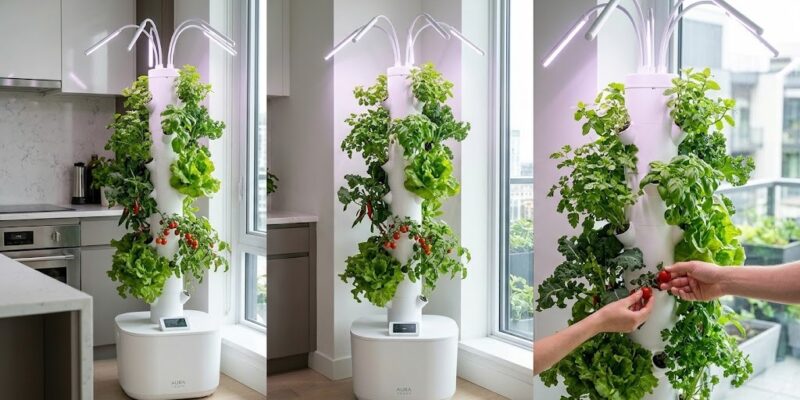
A hydroponic tower is a vertical growing system that feeds plants with nutrient-rich water instead of soil. A grow tower stacks dozens of plant sites into a column that takes up about as much floor space as a small chair. This guide explains how the system works, what it grows well, and what to know before you buy one.
What Is a Hydroponic Tower?
A hydroponic tower is a freestanding column with a water reservoir at the base and planting pockets along its sides. A pump lifts nutrient solution to the top, and the water trickles down past the roots before returning to the reservoir. Because the water recirculates, the system is closed-loop and wastes very little.
The terms “hydroponic tower” and “grow tower” usually describe the same thing. Some towers are aeroponic, meaning the roots are misted rather than bathed in flowing water. The layout is the same, but the delivery method differs.
Plants sit in net pots filled with an inert medium such as rockwool, which holds the roots in place and supplies no nutrients of its own. All nutrition comes from the water.
How a Grow Tower Works
Every grow tower has four core parts:
- Reservoir. Holds water and dissolved nutrients.
- Pump. Moves the solution to the top of the tower.
- Planting sites. Net pots that hold seedlings against the tower wall.
- Timers. Control the pump and lights so the cycle runs on its own.
Because nutrients reach the roots directly, plants spend less energy searching for food. That energy goes into leaves and fruit instead, which is why hydroponic plants often grow faster than soil plants.
The ALTO Garden GX Tower, for example, holds 24 plants and recycles its water continuously. Typical timer settings are a pump that runs 15 minutes of every hour for about 14 hours a day, with grow lights on for 14 to 16 hours. Once the timers are set, daily care is minimal.
Benefits of Growing Vertically
Small footprint. A 24-plant tower fits in under one square meter. The same harvest in a soil bed could need 50 to 60 square feet. This makes towers practical for apartments, condos and balconies.
Lower water use. Water that is not absorbed returns to the reservoir instead of draining into the ground. ALTO Garden reports savings of up to 95% compared with conventional growing.
Faster growth. Manufacturers report growth up to three times faster than soil, with yields about 30% higher. Results vary by crop, light and nutrient management, but faster cycles are a consistent advantage of hydroponics.
No soil mess. Without soil, there is less mess, and a tower can sit in a kitchen or living room. Soil-borne pests and weeds are also much less of a problem.
Control over how food is grown. You decide what goes into the water, so you know exactly how your food was produced.
What to Grow in a Hydroponic Tower
Towers suit crops that grow upward or outward and have compact root systems.
- Leafy greens: lettuce, spinach, kale, chard, bok choy
- Herbs: basil, parsley, dill, thyme, chives, rosemary
- Fruiting plants: tomatoes, cucumbers, peppers, strawberries
Fruiting plants need more light and nutrients than greens, and some, such as tomatoes and cucumbers, need pollination. Moving the tower outdoors during mild weather lets bees and wind do that work. Indoors, you can pollinate by hand.
Avoid root vegetables. Carrots, potatoes and onions grow downward and are hard to harvest from inside a tower.
Indoor and Outdoor Use
Indoors, a grow tower relies on LED grow lights, which supply the light spectrum plants need regardless of season. Outdoors, sunlight replaces the lights, so you can switch them off.
A portable tower can move with the seasons: outside in mild weather, inside when it gets too hot or too cold. If you plan to leave it outdoors, look for thick, UV-resistant walls that will not fade or crack. The GX Tower uses 2 mm walls for this reason.
How to Start a Tower Garden
- Assemble the tower. Most towers go together in about 20 minutes without tools.
- Germinate seeds. Plant seeds in rockwool cubes and keep them moist under a seedling grow light. ALTO Garden has a germination guide if you need one.
- Transfer seedlings. When seedlings reach about two inches, place them in the net pots.
- Fill the reservoir. Add water and hydroponic nutrients, then set the pump and light timers.
- Harvest. Leafy greens are typically ready about three weeks after transfer. Harvest outer leaves first so the plant keeps producing.
Routine Maintenance
Tower care is simple but should be consistent:
- Check the water level every few days and top it up as needed. Plants drink more as they mature.
- Monitor pH. Most greens and herbs prefer a pH of roughly 5.5 to 6.5. Test weekly and adjust if needed.
- Replace the nutrient solution about every two weeks, or as your nutrient manufacturer recommends.
- Keep the pump and tubing clean to prevent algae and clogs.
- Keep water temperature moderate. Warm water holds less oxygen and encourages root problems.
Hydroponic Tower or Soil Garden?
| Hydroponic tower | Soil garden | |
| Space needed | Under 1 m² | Much larger |
| Water use | Recirculating, very low | Higher, much is lost to drainage |
| Growth speed | Faster | Slower |
| Indoor suitability | High | Low (mess, light) |
| Root vegetables | Not suitable | Suitable |
| Setup cost | Higher upfront | Lower upfront |
| Electricity | Required for pump and lights | None |
If you want fresh greens and herbs year-round in a small space, a tower is the better fit. If you want to grow root crops or have a large yard, soil still makes sense.
Is a Grow Tower Right for You?
A hydroponic tower works well if you want a steady supply of greens, herbs or compact fruiting plants without a yard. It is also a good fit if you are new to gardening, since timers handle most of the routine. The tradeoffs are the upfront cost, electricity use, and a few minutes of weekly upkeep.

Comments